
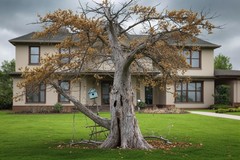
Every winter, homeowners look out at bare branches and start to worry. Is that maple simply sleeping through the cold, or did it quietly give up months ago? Knowing the difference matters, because a truly dead tree can become a hazard while a dormant one just needs patience. Understanding how to know if a tree is dead can save you money, protect your property, and help you decide whether to call for a professional tree care service in the Abbotsford area before a small problem becomes a big one.
Trees are remarkably good at hiding their condition. A leafless canopy in January is perfectly normal in Wisconsin, but the same bare look in July almost always spells trouble. The trick is learning to read the subtle clues a tree gives off year-round so you can tell dormancy from decline with confidence.
Dormancy Is Normal, and Here Is Why
Dormancy is a survival strategy. As days shorten and temperatures drop, deciduous trees pull resources from their leaves, drop them, and slow their metabolism to conserve energy. This is completely healthy behavior and is the reason our landscapes go quiet each fall. During this period a tree looks lifeless from the outside while it is very much alive underneath.
The confusion usually starts in spring, when neighboring trees leaf out and one lags behind. Some species naturally wake up later than others, and a cold or wet season can delay budding by weeks. Before you assume the worst, give a slow starter time to catch up. If everything else in your yard is green by late spring and one tree remains stubbornly bare, that is when a closer inspection is warranted.
The Scratch Test: A Simple First Check
The fastest way to check for life is the scratch test, and you can do it in seconds. Using your fingernail or a small pocketknife, gently scrape away a thin sliver of bark from a young twig or branch. Just beneath the surface you are looking at the cambium layer. If it is green and moist, the tree is alive and likely just dormant. If the layer is brown, dry, and brittle, that section is dead.
One dead twig does not condemn an entire tree, so test several branches in different areas. Start at the outer tips and work your way toward larger limbs and the trunk. If the green tissue only shows up closer to the base, the tree may be dying back from the top, which is a warning sign worth having examined. A consistent lack of green anywhere is a strong indicator you are dealing with a dead tree rather than a sleeping one.
Other Signs That Point to a Dead Tree
The scratch test is a great starting point, but a full picture comes from looking at the whole tree. Several visual and structural clues can confirm what a single scrape only hints at. When learning how to know if a tree is dead, pay attention to these patterns rather than relying on any one symptom alone.
- Brittle branches that snap cleanly with no flexibility, instead of bending like living wood.
- Large sections of missing, peeling, or cracking bark that expose smooth wood underneath.
- Mushrooms, conks, or other fungal growth at the base or along the trunk, which often signal internal rot.
- A noticeable lean that appeared suddenly, along with heaved or cracked soil around the roots.
- Vertical cracks, deep cavities, or hollow-sounding wood when you tap the trunk.
Timing is another clue. If a tree failed to leaf out at all while its neighbors thrived, or if it dropped leaves prematurely in mid-summer, those are red flags. Sparse foliage, undersized leaves, or dead branches scattered through an otherwise full canopy suggest the tree is declining even if it is not fully dead yet. Early intervention through professional tree diagnosis and treatment can sometimes reverse the slide before removal becomes the only option.
What Might Be Killing Your Tree
Even a healthy-looking tree can be under attack from within. Pests like the emerald ash borer have devastated ash populations across the region, and once an infestation takes hold the decline can be swift. If you have ash trees on your property, professional EAB treatments can protect them before it is too late. Watch for D-shaped exit holes, thinning canopies, and woodpecker activity, which are all telltale signs of borer damage.
Disease, drought stress, soil compaction, and root damage from construction or grade changes are other common culprits. Storm damage can also open wounds that invite decay for years afterward. When several stressors stack up, a tree that looked fine one season can decline the next. Homeowners across Milwaukee, WI often reach out for tree disease control the moment they spot discoloration or dieback, and acting early frequently makes the difference between saving a tree and losing it.
When to Call a Professional Arborist
Some situations call for expert eyes. If a tree is large, close to your home, or leaning toward a driveway or power line, do not gamble on a guess. A certified arborist can assess structural integrity, identify hidden decay, and determine whether the tree can be treated, pruned, or needs to come down. This is especially important because a dead tree grows more dangerous the longer it stands, shedding limbs and eventually failing entirely.
A professional evaluation goes beyond the scratch test to include root health, pest presence, and overall stability. If treatment is possible, options like targeted pruning, fertilization, or insect control may bring a struggling tree back. If removal is the safest path, it is far better handled before a storm makes the decision for you. You can always browse the range of tree and lawn care services available to see how an assessment fits into a broader care plan.
Keeping the Rest of Your Landscape Healthy
One declining tree is often a signal to check on the rest of your yard. Trees compete for water and nutrients, and stress spreads when soil conditions, drainage, or pests affect an entire area. Regular pruning, seasonal fertilization, and routine inspections keep your landscape resilient and help you spot trouble long before it turns fatal. A proactive maintenance rhythm is one of the best investments you can make in your property's long-term value and safety.
To recap, learning how to know if a tree is dead comes down to a few reliable steps: use the scratch test to check for green cambium, examine branches for flexibility, look for bark loss and fungal growth, and pay attention to whether the tree leafs out in season. When the signs point to decline or you simply are not sure, professional help removes the guesswork.
Whether you need a straightforward consultation or tree and stump removal in Abbotsford, WI, we serve Mosinee, Milwaukee, Abbotsford, and neighboring communities with the expertise to keep your landscape safe and thriving. If a tree in your yard has you second-guessing, reach out for a professional assessment and get a clear answer before the next storm rolls through.