
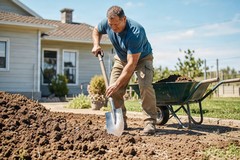
Water is one of the most persistent forces acting on your property, and the way your yard is shaped determines whether that water helps your landscape or slowly damages it. Many homeowners don't think about the slope of their land until they notice soggy lawn patches, a wet basement, or soil washing away after a storm. That's where grading comes in. If you've ever wondered what is grading in landscaping and why professionals talk about it so often, you're already asking the right question, and the team behind our tree services in Milwaukee, WI sees its effects on yards every single day.
Grading is foundational to nearly every successful landscape project, yet it tends to stay invisible when done well. Understanding how it works can help you protect your home, keep your plants thriving, and avoid expensive repairs down the road. Let's break down the essentials in plain language.
What Is Grading in Landscaping?
At its simplest, what is grading in landscaping comes down to shaping and leveling the ground to create the right slopes and contours across your property. It involves adding, removing, or redistributing soil so that water flows where you want it to go, usually away from your home's foundation and toward appropriate drainage points. Grading establishes the baseline on which everything else in your landscape depends, from your lawn and garden beds to patios, walkways, and retaining walls.
There are generally two stages to consider. Rough grading sets the overall shape of the land and handles major elevation changes. Finish grading refines the surface, smoothing it out and preparing it for sod, seed, mulch, or hardscaping. Both stages rely on careful measurement, because even a small error in slope can change how water behaves across an entire yard. A properly graded surface typically slopes away from structures at a gentle but consistent angle so moisture never pools where it shouldn't.
Why Proper Grading Protects Your Home and Yard
The most important reason to care about grading is water management. When the ground around your foundation slopes toward the house instead of away from it, rainwater and snowmelt collect against the walls. Over time, that moisture can seep into basements, crack foundations, and create the damp conditions that attract mold and pests. Correct grading directs that water safely away, acting as your property's first line of defense.
Beyond the house, grading has a direct effect on the health of your landscape. Plants, trees, and turf all have different tolerances for moisture, and poorly graded ground creates both soggy low spots and bone-dry high spots. Standing water suffocates roots and promotes disease, while erosion strips away the nutrient-rich topsoil your plants need. A well-graded yard distributes water evenly, giving everything a fairer chance to flourish. This matters especially for mature trees, whose root systems can suffer quietly for years before visible symptoms appear.
Signs Your Yard May Have Grading Problems
You don't need surveying equipment to spot the warning signs of poor grading. Your landscape usually tells you when something is off, and catching these clues early can save you significant trouble. Keep an eye out for the following:
- Water pooling in the lawn or near the foundation after rain
- A consistently damp or musty basement or crawl space
- Visible erosion, exposed roots, or channels cut into the soil
- Mulch or soil washing onto walkways and driveways
- Patches of grass that stay yellow, thin, or waterlogged
Any one of these can point to a grading issue, and several appearing together make the case stronger. Because drainage problems tend to worsen gradually, what looks like a minor nuisance one season can become a structural concern the next. Addressing the grade early is almost always less costly than repairing the damage that improper water flow causes over time.
How Grading Connects to the Rest of Your Landscape
Grading rarely happens in isolation. It sets the stage for drainage systems, planting plans, and hardscape features, which is why it should be considered at the very start of any major project. If you're installing a patio, a retaining wall, or a new garden bed, the grade determines how water moves around those features and whether they hold up over the years. Skipping or rushing this step often leads to settling, cracking, and drainage headaches later.
The condition of your trees is closely tied to grading as well. Changing the soil level around an established tree, whether by piling on fill or cutting it away, can stress or even kill it by disturbing the root zone. That's why thoughtful grading accounts for the trees you want to keep. If you're unsure how regrading might affect your existing plantings, it's worth pairing the work with professional tree and shrub pruning in Milwaukee, WI and an expert eye on root health. When grading and tree care are coordinated, your whole landscape ages more gracefully.
Should You Grade Yourself or Hire a Professional?
Minor leveling for a small garden bed is something many homeowners can handle with a rake, a shovel, and some patience. But true grading, the kind that controls drainage across an entire yard or protects a foundation, is a different undertaking. It requires reading elevations, calculating slope percentages, and often moving substantial amounts of soil. A grade that looks flat to the eye may be pitched the wrong way by just enough to send water toward your house.
Professionals bring the tools and experience to get the slope right the first time, and they can anticipate how changes will interact with trees, utilities, and existing structures. For properties with mature trees, this expertise is especially valuable, since combining grading with proper tree and lawn care services helps ensure the soil work doesn't compromise root systems. If a tree already shows signs of stress, a professional can recommend tree diagnosis and treatment in Milwaukee, WI to address underlying issues before and after the ground is reshaped. We proudly serve Milwaukee and the surrounding communities with this kind of integrated approach.
Bringing It All Together for a Healthier Yard
Understanding what is grading in landscaping gives you a powerful lens for seeing your property more clearly. The slope of your land quietly influences everything, from the dryness of your basement to the vigor of your lawn and the longevity of your trees. Getting it right protects your biggest investments and sets the foundation for a landscape that looks good and performs well through Wisconsin's wet springs, dry summers, and heavy snowmelt.
If you've noticed pooling water, erosion, or stressed plantings, don't wait for the problem to grow. A thoughtful grading plan, combined with attentive care for your existing trees, can turn a troublesome yard into a resilient one. Homeowners weighing a project can also benefit from a tree consultation in Amherst, WI to understand how any ground work will affect the trees they value most. Reach out to our team for a closer look at your property, and let's shape a yard that works with the water instead of against it.